
How Coloradans can help CDOT prevent wildfires this summer
Statewide collaborative effort missing one thing: you
By: Stacia Sellers, Division of Maintenance and Operations Communications Lead
Key Takeaways:
- As a potentially brutal wildfire season approaches, CDOT crews gear up for prevention and fire response. CDOT collaborates closely with multiple state agencies to mitigate wildfire risk along state highways.
- Drivers and truckers, do your part: Never throw lit cigarettes from your vehicle, don’t drive into tall, dry grass, and keep chains from dragging and brakes cool.
- In an average year, Colorado sees 6,000 to 7,000 wildfires, according to the U.S. Drought Monitor. Given the state’s low snowpack from a historically dry winter, we could see as many as 9,000 fires across the Centennial State, according to experts from the Division of Fire Prevention and Control.
- Take a breath. We’re on it. But we need your help. CDOT has been gearing up all winter and spring, taking proactive steps to reduce wildfire risk along the state’s highway network. In addition to our efforts, we’re calling on all drivers and operators to do their part to prevent potentially catastrophic roadside fires.
What can you do to prevent wildfires along Colorado roadways?
- Truckers and toy haulers, mind your chains. Make sure they’re not dragging, because one spark is all it takes on a hot, dry day.
- Ask your mechanic to check your exhaust system during your pre-road-trip check-up. A hot catalytic converter can be an unsuspecting culprit.
- Never pull off the road into tall, dry grass. Of course, stay safe and move out of harm's way if your car breaks down on the road, but be mindful that parking a hot car on dry tinder is risky.
- Truckers, check your brakes. Hot brakes on Colorado’s long, steep mountain pass descents are not uncommon.
- Never, ever throw lit cigarette butts out your window.
What is CDOT doing to prevent wildfires?
- First of all, we’re expanding roadside vegetation management. Dry, unmowed grass and dense brush along highway shoulders are among the most common ignition points for roadside wildfires. Mowing a wider swath along state highways, trimming trees and cleaning up dead and dry vegetation creates clear breaks that can slow or stop a fire from spreading into the surrounding wildland.
- We’re strengthening our partnerships with state agencies like the Colorado Division of Fire Prevention and Control, the governor’s office, and municipal fire and EMS services statewide. We’re expanding coordination with partner agencies and putting contingency plans in place to protect travelers and communities if fire conditions deteriorate this summer.
- CDOT is also an active participant in the state’s emerging multiagency drought response, working alongside Colorado State Patrol, Colorado State Fire Chiefs, county emergency managers and local fire departments to share risk information and align response protocols.
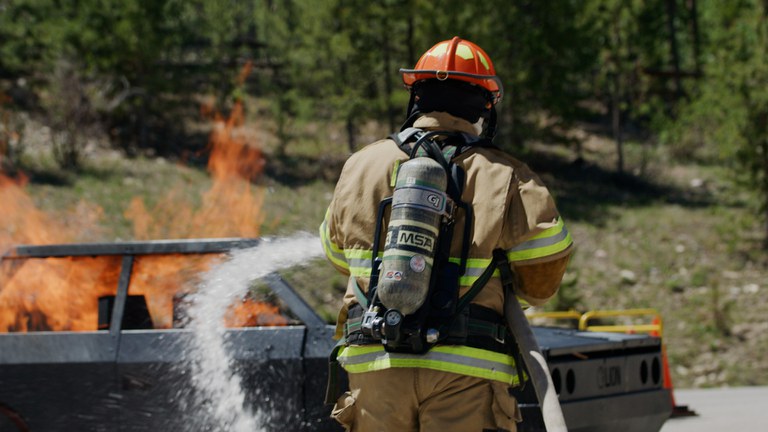
- CDOT’s Fire Program trains maintainers as firefighters, maintains fire trucks and other heavy machinery, and staffs operations centers 24/7 to respond to roadway fires and tunnel incidents and to support our partners.
What happens when a fire does break out on or near a Colorado state highway?
In the event of an active fire near a highway corridor, the Department’s regional maintenance and operations centers utilize standing communication channels with local incident management teams and have pre-positioned equipment in areas where roadway access could be critical to evacuation or suppression efforts.
CDOT coordinates with the Colorado Division of Homeland Security and Emergency Management to ensure that highway closure and traffic management protocols are up to date for potential fire-related incidents.
We communicate with the public through rapid deployment of variable message signs and publicize current road conditions, closures, fire-related restrictions, alternate routes and other public notifications through COtrip.org and the COtrip Planner app.
Stay safe and enjoy your summer, Colorado! Together, we can reduce the risk of wildfires near our roads.
