
Drivers are watching YouTube and TikTok behind the wheel. Experts say it's getting worse (Yahoo News)
Shift into Safe News
Had the crash video not been so terrifying, it might have passed for low comedy.
A white pickup truck slammed into a California Highway Patrol cruiser that was parked at the scene of a prior accident. The driver told officers he had been watching YouTube videos on his phone and didn't see the flares or the stationary patrol car. He didn't even glimpse the officer who was waving a strobe flashlight, and who had to jump out of the way when the truck barreled in.
The incident on Highway 101 in Redwood City illustrated a form of driver misbehavior that's become more and more common, as screens become normalized in cars. Motorists habitually pick up their phones while sitting in traffic, or scroll dashboard touchscreens as they cruise along a freeway at 65 miles per hour. People have their eyes glued to navigation apps instead of the road.
“We see people reading, watching videos, watching a football game," said CHP officer Sophie Lu, a spokesperson for the Redwood City division. She posted a body-worn camera video of the YouTube watcher crash on social media, warning other drivers to “stay focused behind the wheel.”
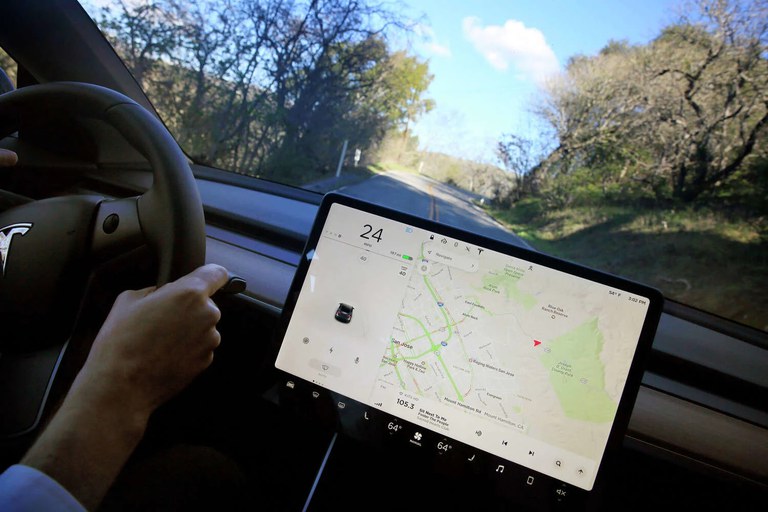
Transportation experts worry that these advisories are no match for a screen-addicted culture. Many point to an unsettling paradox of modern driving: Cars are theoretically getting safer, equipped with such features as lane-keeping, emergency braking, rearview cameras, collision warnings and crumple zones. But all of these gains come with a downside. People are over-relying on the technology, and even succumbing to the illusion that the car is the one driving, said Scott Moura, a professor of civil and environmental engineering at UC Berkeley.
“Automakers and researchers are reimagining mobility, so it's more of an experience of being chauffeured, and you can enjoy your favorite HBO show or scroll on TikTok,” Moura said. As a result, all of our technological gains are being undermined by a rise in distraction. Data from the National Highway Traffic Safety Administration shows that 40,000 people die each year on U.S. roads, with the number increasing to nearly 43,000 in 2021 — a 16-year high. According to the administration, distracted drivers caused 3,275 fatal crashes in 2023, with 369 of them linked to cellphones specifically.
