
How to prevent vehicular heatstroke and what to do if you see an unattended passenger in a hot car
Shift into Safe News
Over the last 25 years in Colorado, seven children have tragically died from vehicular heatstroke, but there have been no reported deaths in the past decade. CDOT urges parents and caregivers to keep this number at zero, especially as we enter the hottest months.
Vehicular heatstroke can happen even in mild temperatures as low as 57 degrees, affecting children, older individuals, and people with disabilities who may be unable to exit a hot car. Eighty percent of the total heat rise occurs in the first 30 minutes, when maximum temperatures inside a vehicle can exceed 150 degrees, according to NoHeatStroke.org. A child’s body temperature rises three to five times faster than an adult’s, and older individuals are also more sensitive to heat. Additionally, people with disabilities are at a higher risk of heatstroke if they’re left unattended in a hot car because they may not be able to exit on their own or communicate their needs to a caregiver.
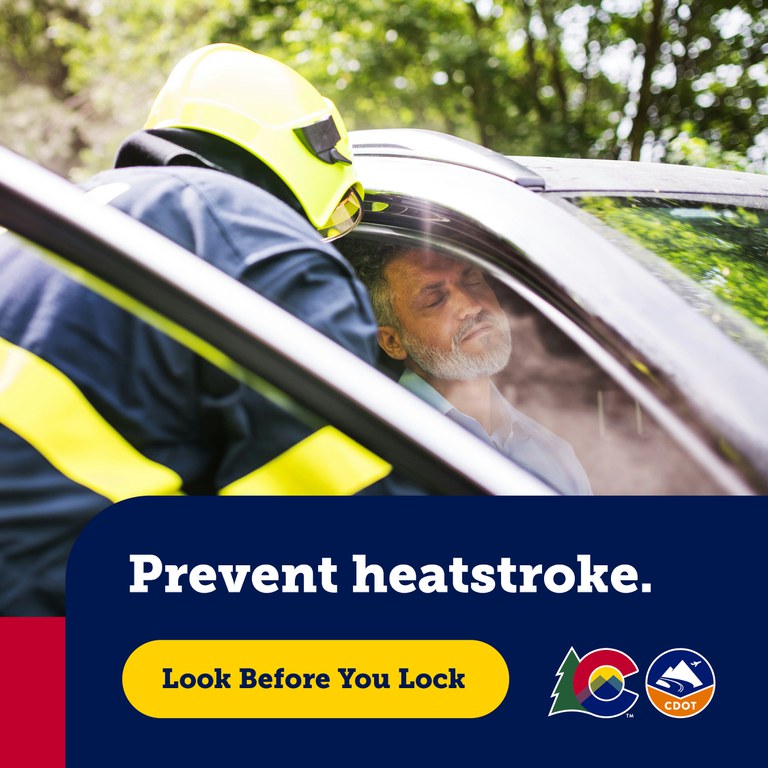
Children knowingly left in cars by their caregivers account for 21% of vehicular heatstroke fatalities. Time is not your friend this summer — short errands can quickly turn into long lines or unforeseen delays. Parking in the shade or cracking a window will not ensure one’s safety.
Over half of vehicular heatstroke deaths in children occur because they were unknowingly left in a vehicle. CDOT recommends leaving a passenger’s belongings (such as a toy or stuffed animal) in the front seat, or entering your passenger’s destination in your GPS as a reminder.
Everyone must take precautions to keep the state’s hot car deaths at zero, not just parents and caregivers. According to NHTSA, more than 25% of pediatric vehicular heatstroke deaths occur when a child gains access to an unlocked car and gets trapped. It’s vital for anyone with a vehicle to lock their car doors so children and other vulnerable individuals can’t gain access to an unsupervised vehicle. Even if you don't have a child of your own, a child in your neighborhood could get into your unlocked vehicle. If a child is missing, quickly check all vehicles, including the trunk.
If you notice an unattended passenger in a hot car, act immediately and call 911. In 2017, Colorado passed HB17-1179, which provides Coloradans immunity from civil and criminal liability for forcibly entering a locked vehicle to provide aid to an at-risk person or animal.
