
Study offers insight into why U.S. traffic fatalities remain high (News-Medical)
Shift into Safe News
Vision Zero begins with a simple but powerful premise: No loss of life on the transportation system is acceptable. Despite the ambitious nature of this goal, the United States has made little meaningful progress toward its realization.
Traffic fatalities in the U.S. remain unchanged since 2000, with about 40,000 deaths each year from motor vehicle crashes. But the distribution of those deaths has shifted sharply. Over that period, pedestrian and bicyclist fatalities have increased by 68%.
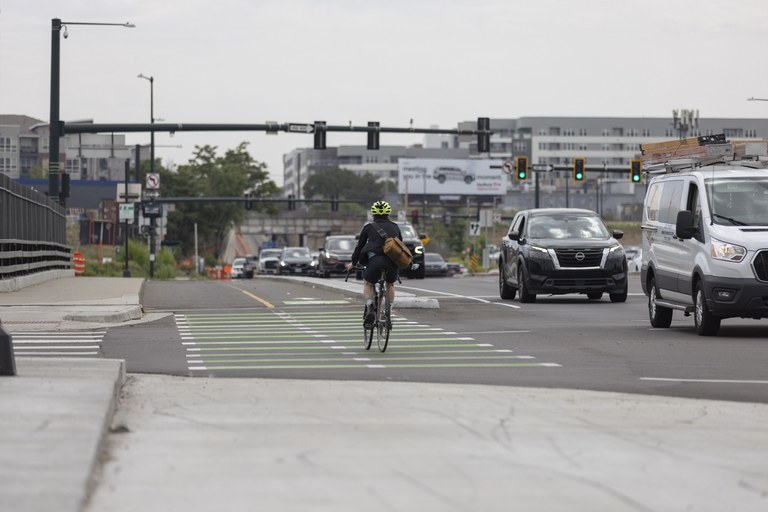
Today, people walking and biking make up 1 in 5 traffic deaths — and per mile traveled — they are about 30 times more likely to be killed than people in motor vehicles. Of the more than 50 jurisdictions that have adopted the Vision Zero program, only New York has reported a net reduction in deaths and injuries.
U.S. road safety research has often pointed to arterial street design — such as higher speeds and wider lanes — as a key reason vulnerable road users are at greater risk. While design is part of the picture, this explanation is incomplete.
Researchers at Florida Atlantic University are now challenging this long-standing assumption, offering new insight into why the U.S. has struggled to make meaningful progress in reducing — and ultimately eliminating — traffic fatalities.
To address this urgent public issue in Florida and across the nation, the researchers analyzed 222 miles of arterial highways across Florida. Focusing on 10 urban arterials in the Miami, Orlando and Tampa regions, they examined pedestrian and bicyclist injury crashes. Using Florida Department of Transportation data and satellite imagery, the researchers evaluated corridor segments and signalized intersections separately, resulting in a dataset of 334 segments and 489 intersections.
Results of the study, published in the Journal of the American Planning Association, show that where everyday places like grocery stores, pharmacies, gas stations and fast-food restaurants are built can significantly increase the risk of serious injury or death for pedestrians and cyclists.
By placing these essential destinations along busy, high-speed roads, current planning practices put people in harm's way — turning already dangerous road designs into deadly environments.
