
The best tactics for tackling speeders (Bloomberg)
Shift into Safe News
It’s a calculation you might recall from high school physics: KE = ½ mv². In plain English: The kinetic energy of a body in motion is found by multiplying half its mass by the square of its velocity.
That simple equation carries powerful implications for street safety. Because velocity is squared, even small upticks in speed dramatically increase the force exerted when a motor vehicle is in a collision. Those walking or biking are especially vulnerable: According to research from the AAA Foundation for Traffic Safety, the odds that a pedestrian dies in a crash are 1 in 2 if the striking vehicle is moving at 31 miles per hour but only 1 in 4 if it travels at 23 mph.
Lead-footed drivers are among the greatest hazards on the road: More than 10,000 annual crash deaths in the U.S. are attributable at least partly to speeding (roughly a third of the national total). Slowing them would improve the country’s eye-popping rate of traffic deaths, which far exceeds those of peer nations worldwide.
Over the last year, journalist David Zipper looked at the array of tactics city leaders can use to curtail speeding, such as speed humps, automatic traffic cameras and conversions to make one-way arterials bidirectional. His analysis culminated in a new research briefing published by the MIT Mobility Initiative.
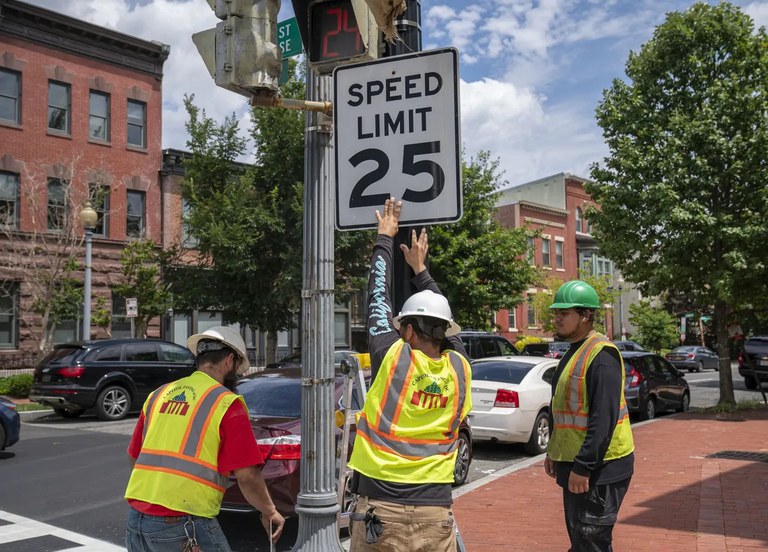 What he learned might be surprising. With rare exceptions, these strategies to reduce speeding are effective, often to a striking degree. And contrary to common perceptions, residents generally support them.
So why aren’t these lifesaving measures being implemented everywhere?
Policymakers at all levels of government hold power over speeding. On the federal side, the National Highway Traffic Safety Administration could mandate technology known as Intelligent Speed Assist that prevents extreme acceleration (the National Transportation Safety Board has recommended that step, but NHTSA has demurred.) The Trump administration has threatened to cut funding for speed cameras, which would undermine many local street safety efforts. State officials, for their part, can revoke drivers’ licenses or direct traffic engineers to lower local speed limits.
