
How connected vehicle technology could significantly decrease traffic crashes (11Alive)
Shift into Safe News
Atlanta’s traffic reputation is well-earned. But behind the congestion, Georgia is quietly leading the way in connected vehicle technology designed to make roads safer and traffic flow better.
Last summer, Atlanta hosted an international conference on Intelligent Transportation Systems and the Georgia Department of Transportation (GDOT) installed some of this technology on a loop around the Georgia World Congress Center, where the conference took place. And I got a ride along to see how wireless technology can talk to vehicles and help drivers move more safely and efficiently.
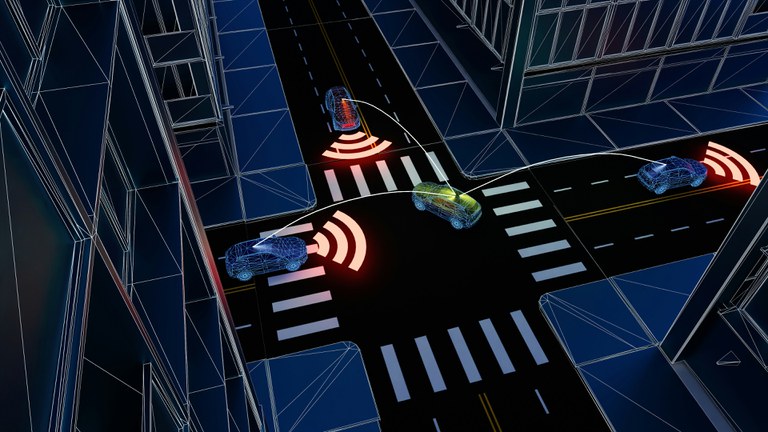
Improving traffic doesn’t just mean building more roads. Much like smartphones can connect to and control home devices, traffic signals and road equipment can now communicate wirelessly with vehicles to warn drivers about changing conditions ahead.
GDOT has been investing in connected vehicle technology for years and now leads a 20‑state study focused on expanding and improving it.
“We see the tremendous safety and mobility benefits that can come from it,” said Alan Davis, GDOT’s Director of Operations.
Testing smarter signals in downtown Atlanta
To test the technology, GDOT built a loop of roadside units around the Georgia World Congress Center. These units are installed at traffic and pedestrian signals and connected to signal controllers — the “brains” that manage light timing and sequencing.
“That’s where all the decisions are made,” said Justin Hatch, GDOT assistant traffic engineer. “With that information, the roadside unit is able to broadcast relevant information to a vehicle.”
During the ride‑along, a tablet ran a test app that displayed live information for drivers, including:
- Pedestrians in crosswalks
- Traffic slowdowns ahead
- Countdown timers for red and green lights
Drivers can even see recommended speeds to catch the next green light.
For example, “If you drive 20 miles per hour, you’re going to catch the next green,” Hatch said. “No need to speed.” Inversely, the technology can tell the app when the light will turn red and notify drivers that are stopped when lights are about to turn green. All of this serves to move traffic more efficiently.
Read “How connected vehicle technology could significantly decrease traffic crashes” to learn more.
