
Preventing Vehicular Heatstroke in Colorado
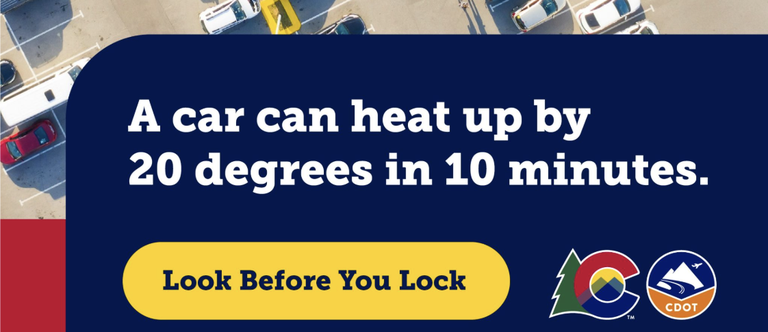
CDOT is dedicated to keeping Colorado’s vehicular heatstroke death count at zero. While our state hasn’t seen a death in nearly a decade, the risk to children, animals, the elderly and disabled remains high. Vehicular heatstroke can occur in mild temperatures as low as 57°F, and 80% of the total heat rise occurs in the first 30 minutes. Read "New CDOT campaign brings awareness of dangers of hot cars in summer" to learn more about the campaign.
Understanding the reality of vehicular heatstroke is the first step in prevention. Children’s bodies heat up three to five times faster than adults, and short errands can result in unexpected delays. People with disabilities are at a higher risk of heatstroke if they’re left unattended in a hot car because they might not be able to exit on their own or communicate their needs to a passerby. It’s important for bystanders to provide help or call 911 if they see anyone inside a hot car who appears flushed, distressed or dehydrated.
Don’t let a minor distraction or a routine change result in a passenger experiencing vehicular heatstroke. Keep a passenger’s items, such as their toy or device, in the front seat with you or enter their destination into your GPS as a reminder that you aren’t alone in the car. Vehicular heatstroke is preventable.
CDOT has pre-drafted social media posts, newsletter articles and downloadable graphics that are available for repurposing. Access the Unattended Passengers Stakeholder Toolkit here.
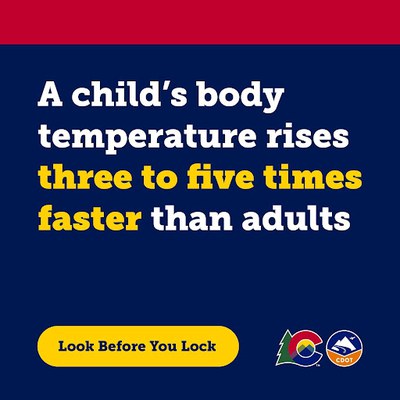
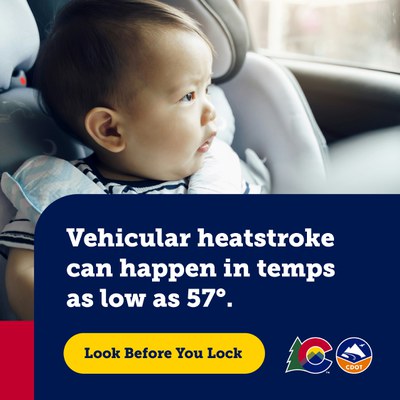
- Vehicular heatstroke can happen in temperatures as low as 57°F.
- Maximum temperatures inside a vehicle can exceed 150°F.
- 52% of vehicular heatstroke deaths in children occur because they were unknowingly left in a vehicle.
- 25% of deaths occur when children gain access to an unlocked vehicle and become trapped.
- Parking in the shade or cracking a window will not ensure a passenger’s safety.
Share the Responsibility: Everyone Plays a Part
Traffic safety for our most vulnerable passengers is a shared responsibility. You don’t need to be a parent or caregiver to make a difference.
- Lock your vehicle doors: Even if you don’t have children, keep your car doors locked at all times. A child in your neighborhood could gain access to your vehicle and become trapped.
- Check your surroundings: If a child is missing, quickly check all nearby vehicles, including trunks.
- Speak up: If you notice an unattended passenger in a hot car, act immediately and call 911.
Other Vulnerable Passengers
The elderly and individuals with disabilities are also at significant risk when left unattended in a vehicle. These vulnerable passengers may face mobility limitations, cognitive impairments, or communication barriers that prevent them from advocating for their needs or exiting the vehicle. Exposure to extreme heat can lead to severe health complications including permanent brain damage or fatal heatstroke. Ensuring their safety requires the same level of awareness and proactive checking as with any other passenger.
Hot Temperatures Can be Fatal for Animals
On a warm day, the temperature inside a vehicle can reach 120°F in a matter of minutes, even with the windows cracked. Dogs and other animals don’t sweat, meaning they can’t cool themselves down. Their body temperature can rise quickly, leading to brain damage, organ damage, or death from heatstroke or suffocation. Never leave an animal unattended in a vehicle. If you see an animal in a hot car, check for signs of stress, including heavy panting, glazed eyes, unsteadiness, vomiting, or a dark tongue. If an animal is showing signs of stress, call 311 and request to immediately be connected to Animal Care regarding a dog in a hot car. Learn more about Pet Health and Safety on the Denver Animal Shelter website.
Leaving an animal in a parked vehicle in conditions that endanger its health or well-being (due to extreme heat, cold, or lack of ventilation) is classified as animal cruelty under Colorado law. Violators face severe penalties, including fines up to $999, jail time, and mandatory court appearances.
Penalties
If you leave anyone – including a child, pet or at-risk person – in a hot car, you can face serious criminal charges or penalties.
In Colorado, leaving a child in a hot car is considered child abuse.
If no death or injury results, the crime may be a Class 2 or 3 misdemeanor.
The highest penalty is a Class 2 felony for knowingly or recklessly causing death or injury.
Colorado law (C.R.S. 18-6.5-102) defines "at-risk" individuals and provides specific protections for them. This includes:
- Seniors: Anyone 70 years of age or older.
- Individuals with Disabilities: Anyone 18 or older with a disability.
- At-risk Juveniles: Minors under 18 with a disability.
Neglecting an at-risk person is a Class 1 misdemeanor. If neglect leads to death or serious bodily injury, it is classified as a "crime of violence" (C.R.S. 18-1.3-406), which is a felony offense and may result in prison time.
The Good Samaritan Law
In 2017, Colorado passed HB1-1179, which grants Coloradans immunity from civil and criminal liability for a person who forcibly enters a locked vehicle to provide aid to an at-risk person or animal.
- What should I do if I see an at-risk person or animal in a hot car?
- Act immediately and call 911. Colorado’s Good Samaritan Law protects those who provide aid to at-risk persons or animals locked inside a vehicle.
- Can I crack a window to keep the car cool?
- No. Cracking a window does not prevent the vehicle’s interior temperature from rising to dangerous levels.
- Does this only apply to children?
- No. While children are at high risk, this also applies to the elderly, people with disabilities, and pets who may be unable to exit a hot car or communicate their needs.
- What if I’m only running a quick errand?
- Errands often take longer than expected due to lines or delays. The perceived benefit of leaving an unattended passenger in the car for a quick trip doesn’t outweigh the risk of them experiencing vehicular heatstroke. Never leave a vulnerable passenger alone in a hot car.
- How does a child get trapped in a car if they weren’t left in there?
- More than 25% of pediatric heatstroke deaths occur when a child gains access to an unlocked car and gets trapped while playing or hiding. Do your part and always lock your car doors.
