
CO 119 & Hover Intersection
About the Project
For more than a decade, studies, public meetings and surveys have shown that the Colorado Highway 119 and Hover Street intersection is one of the most congested and dangerous in Longmont, and improvements are needed.
Different designs, public suggestions and extensive coordination and collaboration among the city, county and others were taken into account in coming up with the design that will make it safer, more efficient and better for the environment.
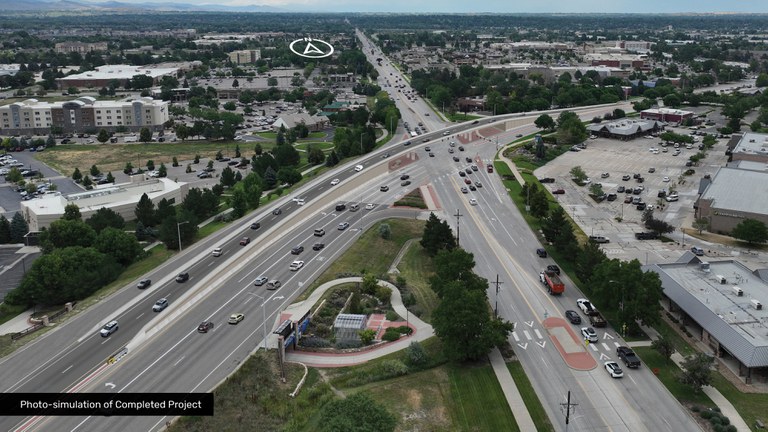
The key part of the new design is a bridge that will go over Hover Street for Boulder-bound traffic on CO 119, which will eliminate more than 20 potential crash areas and improve pedestrian safety with shorter crossings and reduced speeds.
For more information about the design project, visit the City of Longmont's CO 119 & Hover Intersection webpage.
Schedule & Important Dates
- Project Start Date: April 2026
- Project Completion: December 2027
Video: Overview of Colorado 119 and Hover intersection improvements
Project Goals
- 50% reduction in overall traffic delays during peak hours
- Nine fewer crashes per year (from about 20 crashes annually to about 11 expected)
- 28% reduction in greenhouse gas emissions from reduced idling
- Safer pedestrian crossings with 75% less distance to cross traffic
Project Benefits
Safety Improvements
Dramatic Crash Reduction
The new design will prevent approximately nine crashes per year through several key improvements:
- Westbound overpass eliminates three crashes per year by removing conflict points where vehicles merge and turn
- Predicted to reduce turning crashes by 90%, preventing five crashes annually
- Reduced congestion and driver frustration will prevent one to three additional crashes per year
Pedestrian and Bicyclist Safety Enhancements
- 75% reduction in crossing distance
- Elimination of high-speed conflict points: No more crossing the dangerous southbound right-turn lane from Hover to CO 119
- No longer having to cross southbound CO 119 at all
- Better visibility and refuge areas for safer crossings
Traffic Flow Improvements
Today's Problem
Currently, drivers spend an average of one minute stopped at this intersection, with total delays ranging from one to two minutes per trip.
Without This Project (Future)
Traffic growth would create a nightmare scenario:
- Five minutes or more of total delay per trip
- Drivers experiencing multiple waits for the light cycle before getting through the intersection
- Stop-and-go traffic backing up to adjacent intersections
With This Project
- 50% reduction in peak-hour delays across the entire area (delays of a minute or two even in rush hour traffic).
- 20 to 40-second reduction in wait times for Hover Street traffic
- Most drivers pass through with only one stop or no stops at all
Smart Signal Design
The heaviest traffic is often the left turn on CO 119 to go north on Hover. Smart signal design will give this turn more time, meaning this critical movement receives a long green light.
By reducing one entire cycle of lights (for southbound CO 119), all the other traffic will get longer green lights.
Environmental Benefits
Cleaner Air Through Less Idling
- 28% reduction in current greenhouse gas emissions from vehicles spending less time stopped in traffic
- Reduced emissions from commuters who choose to travel by bus or bike with more efficiency for all modes of transportation
Enhanced Trail Connections
The project improves connections to Longmont's trail network, encouraging more walking and biking as alternatives to driving. It will also connect to the new Diagonal Bikeway being built currently.
Smart, Cost-Effective Design
A westbound overpass targets the specific problem without over-building:
- Full interchange would cost much more and require a massive footprint
- The critical eastbound-to-northbound left turn needs special accommodation that a typical interchange can't provide efficiently
- With one bridge, we have the same benefits as two bridges for less money and less impact to surrounding landowners.
- The existing skewed intersection works well with the westbound overpass design
Community Impact
Minimal Disruption
- The compact design limits property impacts to mostly temporary construction easements, instead of closed accesses and right-of-way use
- All business access remains open, including turns into FirstBand and Boot Barn
- Existing parking areas are preserved
Visual Considerations
- Three-span bridge design creates an open, less imposing feel
- Provides better visibility for vehicles, bikes and pedestrians using the intersection
- Gateway aesthetic features are being explored with the City of Longmont
Pedestrian Data
Based on pre-construction counts:
- There are 30 to 36 pedestrians crossing daily east-west on average
- Several bike/pedestrian injury accidents in recent years highlight the need for safety improvements
- Winter counts show lower usage but demonstrate year-round pedestrian activity
By the Numbers
|
Metric |
Current |
Without Project (Future) |
With Project |
|
Average Crashes/Year |
Approximately 20 |
Increasing |
Approximately 11 |
|
Peak Hour Delay |
One to two minutes |
Five minutes or more |
One to two minutes |
|
Pedestrian Crossing Distance |
140 feet |
140 feet |
40 feet |
|
Greenhouse Gas Reduction |
Not available |
Not available |
28% decrease |
|
Traffic Operations |
Intersection Failure |
Network Failure |
Functionally Operational |
-
What is this project about?
The CO 119 and Hover Street project is a major improvement to one of Longmont’s busiest intersections. It will make travel safer, reduce congestion, and cut down on pollution by building a new westbound overpass and redesigning the intersection for smoother, more predictable traffic flow. -
Why is this project needed?
The intersection currently experiences heavy delays, safety risks, and frequent crashes. Without improvements, congestion could cause delays of more than five minutes per trip during peak hours. The new design addresses these issues before they worsen. -
How will the project improve safety?
The project removes up to 21 potential crash points and adds protected-only left turns, reducing all crashes by nearly 50%. Pedestrian crossing distances are 75 percent shorter, and there is better visibility plus refuge/waiting areas to improve overall safety. -
How will it improve traffic flow?
Average delays drop by about 50%. Smarter signals prioritize the busiest movement—eastbound CO 119 to northbound Hover—helping drivers pass through with fewer stops and less waiting. -
What are the environmental benefits?
Reduced idling and smoother flow will cut greenhouse gas emissions by 28%. Even with 1,000 more vehicles per hour, total emissions will decline. New sidewalk and bikeway trail connections encourage walking and biking. -
Why not build a full interchange instead?
A full interchange would cost far more, require much more space, and provide limited extra benefit. The westbound overpass is a targeted, cost-effective solution that minimizes community impacts and improves safety for all modes of traffic. -
Will access to businesses be affected during construction or after?
No. All business access points remain open during and after construction, with no loss of parking. Only small, temporary easements are needed for construction. -
What about the appearance of the bridge?
The design includes a three-span bridge that looks open and welcoming. CDOT and the City of Longmont are exploring visual enhancements to make it a gateway feature. -
How will this project impact pedestrians and cyclists?
Crossings will be much shorter and safer. The project connects to Longmont’s trail network and adds new crosswalks with flashing beacons and added lighting for improved visibility. -
When will construction happen, and how long will it take?
Construction schedules are being finalized. Work will be planned to minimize traffic disruptions and maintain business access throughout the process. -
Who is leading this project?
The Colorado Department of Transportation is leading the effort in partnership with the cities of Longmont and Boulder, Boulder County, RTD and many others. -
How can I learn more or get involved?
Updates will be available through CDOT’s project webpage and future online presentations. Residents and businesses are encouraged to share feedback as the project progresses. -
Are noise walls needed for the bridge?
No, studies have shown the bridge will not add noise for the surrounding areas. -
Why is the north crosswalk being eliminated?
Traffic operations. The project is providing alternate routes that are safer, with improved signage to get pedestrians and bicyclists where they want to go. -
Who is paying for all of this?
Partners were able to secure a federal RAISE grant for much of the work. Local partners also contributed with state funds used for the balance. -
How will this project work in conjunction with the other work on CO 119 ?
The project is designed to be a part of a corridor vision, connecting Boulder and Longmont and other adjacent communities and providing mobility options for commuters. The new Diagonal Bikeway is connected on its north end with the existing trails in the City of Longmont. One of the Bus Rapid Transit (BRT) stops is at CO 119 and Hover intersection. Improvements at this intersection will only add to improved safety for all users, an improvement of traffic operations and connectivity. -
During construction, how will this affect businesses in the area of the intersection?
Businesses in the immediate vicinity of the intersection will remain open at all times. The project is working on providing detailed detours and will keep updating the public and those businesses on the latest developments before and during the construction.
