
Infrastructure needed for e-scooter safety (The University of North Carolina at Chapel Hill)
Shift into Safe News
You’ve probably noticed the proliferation of electric scooters over the last five years. As a pedestrian, it’s easy to blame e-scooter-related problems — crashes, usage on sidewalks, parking in inconvenient and sometimes dangerous locations — on their riders. But the findings of North Carolina researchers working on a nationwide study show that many of the problems accompanying a growing e-scooter ridership more accurately reflect a lack of local infrastructure to support the emerging technology.
In 2023, the Behavioral Traffic Safety Cooperative Research Program — a collaboration between state and federal transportation agencies managed by the Transportation Research Board of the National Academies of Sciences, Engineering and Medicine — completed a nearly three-year-long study on e-scooter safety.
A surge in American e-scooter ridership around 2018 prompted the program to fund the study, one of the first on e-scooter safety.
E-scooter injuries in the U.S. tripled from 2014 to 2018, the study finds.
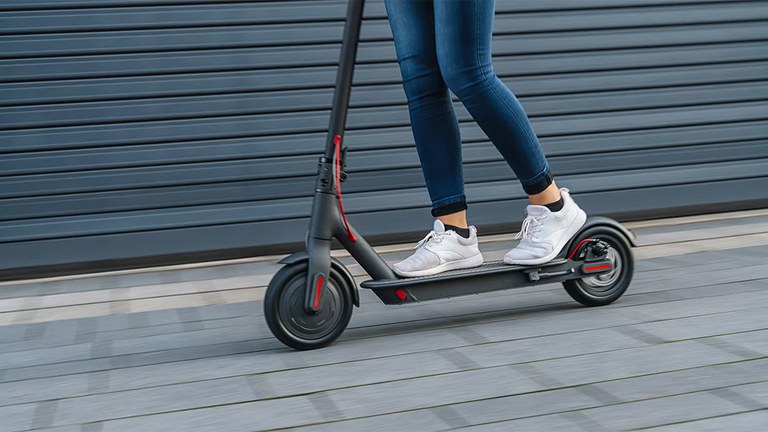
“In some cases, they were dropped overnight into cities and were showing up on the sidewalks,” said Laura Sandt, who led the study as its principal investigator.
Sandt is a senior research associate at the UNC Highway Safety Research Center and director of the Pedestrian and Bicycle Information Center. She also directs the nationwide, federally funded Collaborative Sciences Center for Road Safety.
“There was a lot of concern and interest, and people wanted to understand if e-scooters were safe or where they could be ridden safely,” Sandt said.
The study identifies some of the most frequent causes of e-scooter-related injury and offers changes that communities and policymakers across the country can implement to make roads and sidewalks safer for riders and pedestrians. The goal is proactive and equitable risk prevention.
Riders and risks
The study finds that e-scooter ridership is skewed toward people who are white, middle-income, male, aged 18-34 and live in urban areas. These trends may be connected to the concentration of shared e-scooter programs in downtown areas and on university campuses.
Some of the top injury and fatality risks for e-scooter riders that the study names include unsafe road surface conditions, low visibility and collisions with motor vehicles.
While most e-scooter injuries are minor and occur from falls due to loss of balance or collisions with objects other than vehicles, most of the recorded data points come from hospitals and therefore involve more serious injuries.
The study shows that 90% of all e-scooter injuries occur off the roadway and do not involve a motor vehicle.
Explore the full study on The University of North Carolina at Chapel Hill website.
