
Independence Pass Travel Information
Overview

Note: Oversized and overweight vehicles are strictly prohibited from using the Pass at any time due to narrow and winding roads and steep inclines. Absolutely no vehicles over 35 feet in length (this includes a vehicle and trailer that, together, exceed 35 feet) may use the Pass at any time. These pass restrictions lie between MP 47.2 (Aspen side) and MP 84.2 (Leadville/Twin Lakes side, about one mile west of the junction with US 24).
Use Caution
When driving on State Highway 82 over Independence Pass, use extra caution and remember to share the road. Always keep your eyes on the road and drive slowly while remaining prepared to yield. Cyclists are often present and can be difficult to see around curves in the mountain road. There are also many vehicles entering and leaving the roadway to enjoy the recreational opportunities presented by the Pass.
Rockfall remains an issue on this stretch of SH 82 with occasional rocks in the roadway and even the infrequent road closure. The tight curves and single lane segments of the highway require heightened attention by drivers.
The character and natural beauty of the Pass draw a large number of bicyclists and sightseers. Consequently, sharing access to this Scenic and Historic Byway requires considerable attention.
Independence Pass History
Note for Travelers: The pass typically remains open until November 7 each year, depending upon weather, and is open on the Thursday prior to Memorial Day weekend, always weather permitting. Please check “Road Alerts” on our traveler information site (www.cotrip.org) to confirm road conditions along your route.
Independence Pass was carved out of the land by glaciers and the erosive action of the Roaring Fork River over thousands of years. It is the site of the first road in the Roaring Fork Valley, which was pioneered over Hunter Pass, the original name of Independence Pass, in 1881. An old stage road still remains visible from several locations. The road was built in its current location in 1927 and was paved in 1967.
The ghost town of Independence sits three miles west of the summit and was inhabited by about 2,000 citizens who came to work mining claims in the area between 1880 and 1883. When the gold boom went bust, most people moved on to pursue other claims or moved to the friendlier climate of Aspen. The final resident of Independence was Mr. J.R. Williams, who was one of the original miners and maintained a stamp mill in Independence until 1920. Surveyors named the Williams Mountains after Mr. Williams the same year.
The land around Independence Pass is now owned and operated by several entities. The Colorado Department of Transportation maintains State Highway 82. The US Forest Service owns a portion of the land where the ghost town of Independence sits, and the Loughran family, dating back to the times of original mining claims, also owns a portion. The Aspen Land Trust is currently negotiating to buy the property from the Loughrans to protect it from development.
Ferdinand Hayden first surveyed the pass in 1873 in what was at the time Ute Indian Territory. Roadway improvements undertaken by B. Clark Wheeler in 1882 established the Pass as a toll road charging 25-cents for saddle horses and 50-cents for two-horse wagons. Parts of that roadway are still visible in several locations between Aspen and the Pass summit.
Traffic over the Pass fell off following the repeal of the Sherman Silver Purchase Act of 1893 by President Grover Cleveland and Congress, and resulted in a crash of silver prices. Gold became the new monetary foundation. This devastated the mining communities throughout the valley. The towns of Aspen, Ashcroft, Independence and Ruby all saw their population drop overnight as miners relocated to richer claims. As a result, roadway improvements over the Pass did not occur until 1927, and the road was not paved until 1967.
The pass is part of one of Colorado’s 25 Scenic Byways, the “Top of the Rockies,” and is also designated by the U.S. Secretary of Transportation as a National Scenic Byway and one of ten America's Byways designated in Colorado.
Closure dates for the past five years:
- 2009: 10/29
- 2010: 10/26
- 2011: 11/2
- 2012: 11/9
- 2013: 11/4
Independence Pass Recreation
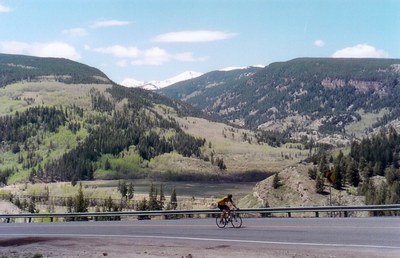 Independence Pass offers a wide variety of recreational opportunities for the outdoor adventurist. Cycling, climbing, camping, hiking and fishing are common pastimes in the area. Visitors to the area should note that the altitude and terrain are very challenging and impact your body in many ways. When participating in outdoor recreation, consider several variables and plan accordingly. Following are some tips for safely enjoying Colorado and Independence Pass recreation.
- Always bring a trail map, drinking water, adequate clothing and footwear, a simple emergency kit and a trash bag for carrying out disposed items.
- Know your fitness level and be aware of your limitations.
- Use sunscreen even on cloudy days. The high altitude of the Pass means there is less atmospheric filtering of the sun's harmful rays.
- Be prepared for sudden changes in weather. Rocky Mountain weather can change drastically in a short period of time, and strong thunderstorms and snowstorms are common on Independence Pass.
Independence Pass is host to dozens of hiking trails, campgrounds, streams and climbs. For more information on recreational opportunities, contact the Division of Wildlife at 970.947.2920, the Aspen Ranger District at 970.925.3445, or the White River National Forest at 970.945.2521. For additional sources of information associated with recreation please see the Independence Pass Related Links page of this Web site.
