
I-270 Corridor Community Enhancements
CDOT is working with community members to identify enhancements to incorporate as part of this project. A Community Enhancement Subcommittee – made up of Stakeholder Working Group members representing neighborhoods across the corridor – helped review input and prioritize and recommend enhancements. Community enhancements are complimentary state commitments that extend beyond the mitigation measures included in the Environmental Impact Statement (EIS).
These recommendations were organized into nine commitments with associated funding allocations. These commitments, in no prioritized order, are:
- Landscape and aesthetics (outside of project limits)
- Landscape and aesthetics (within project limits)
- Enhanced air quality monitoring
- Support for community and environmental projects
- Improved work zones
- Travel demand management
- Freight efficiency and impact reductions
- Workforce development and local business support
- Ongoing public reporting
Enhancement concepts are first evaluated for feasibility, refined through planning and partnership coordination, and subsequently implemented and reported if they align with funding limits and community desires. Any stakeholder may submit an enhancement idea at any time to initiate this process. Please note that an idea must move through Phases 1 to 3 prior to implementation.
The process consists of the following four phases to ensure transparency, coordination, and alignment with established funding targets:
- Phase 1 – Feasibility
- Phase 2 – Detailed Planning
- Phase 3 – Contract Execution
- Phase 4 – Implementing and Reporting
The enhancements that are currently beyond Phase 1 – Feasibility are listed below:
Stage 4: Implementing
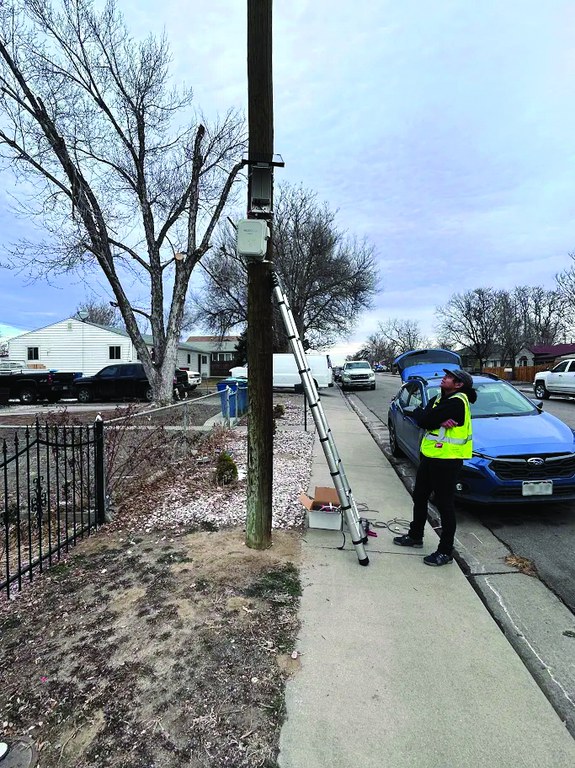
Residents, businesses and local partners shared feedback about prioritizing enhanced air quality monitoring. CDOT is currently monitoring air quality through equipment installed in the I-270 and Vasquez Boulevard interchange, Leyden Park and the Eagle Pointe Recreation Center. Residents can access real-time air quality data on the Love My Air mobile app and website.
Stage 4: Implementing
NETC has worked to create relationships and familiarity within the business and surrounding I-270 communities, attending one-on-one and community meetings and employer interviews and conversations to discuss Transportation Demand Management (TDM) strategies that are of interest to individuals and potential partners. NETC will continue to engage community and business members to find new strategies that will benefit them during construction and beyond, while implementing pre-construction strategies that will address mobility concerns and improve mobility for residents, both in and out of their neighborhoods.
Additionally, NETC is launching a pilot program for mobility debit cards. These debit cards are pre-loaded with money and locked to transportation purchases. Residents can use it for transit passes and toll stickers or transponders and toll credit. This pilot program will launch with 50 residents in the summer of 2026. Residents will fill out a survey, receive the card, complete another survey, and then receive a reload of more money. They have 18 months to use the money before the card expires. We are hand picking pilot residents to ensure a wide variety of participants to test each aspect of the program.
Stage 4: Implementing
CDOT provides I-270 strategic funds for multimodal improvements on 3.6 miles of CO 224 between US 36 and US 6. The project was originally limited to asphalt resurfacing, however, after engaging surrounding residents and Adams County Commissioners, CDOT allocated funds to add multimodal improvements to the CO 224 project. Multimodal improvements include sidewalks, lighting, ADA curb ramps, access to the Clear Creek Trail, access to the South Platte River Trail, drainage improvements, a new pedestrian crossing structure over the Burlington Canal and intersection safety improvements. The design is currently being designed and scheduled for construction in 2027.
Stage 3: Contract Execution
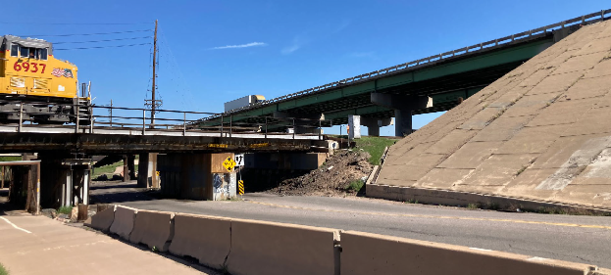
CDOT was awarded the Reconnecting Communities Pilot Program Planning Grant to conduct the East 60th Avenue (60th Ave) Multimodal Connections Study – Brighton Boulevard to Vasquez Boulevard. The Project will conduct planning work to support multimodal solutions that will reconnect communities currently separated by highspeed highway and railroad infrastructure. CDOT and FHWA are currently working on executing a grant agreement that would bring $2 million to engage the public and develop engineered solutions to this issue.
Stage 2: Detailed Planning
CDOT strongly supports the Northeast Transportation Connections' (NETC) grant proposal to establish an on-demand microtransit service in Commerce City through the RTD Partnership Program. This initiative directly supports CDOT's dedication to enhancing mobility and offering alternative travel options for commuters. Furthermore, this proposed service aligns with the I-270 Corridor Improvements Project's (I-270 Project) commitment to provide transportation investments that align with community values and needs. The I-270 Project has budgeted community enhancement funds that are designated to support NETC's implementation of this microtransit service, contingent upon RTD awarding the grant.Stage 2: Detailed Planning
CDOT is working with Adams 14 district to help apply for grant funding for EV busses through Clean Fleet Enterprise.Stage 2: Detailed Planning
CDOT is working with Mapleton Public Schools to help apply for grant funding for EV bus charging infrastructure through Xcel energy and/or Colorado Energy Office.