
Am I too high to drive?
A quick guide to cannabis impairment.
Key Takeaways:
- Play it safe when consuming cannabis and don’t drive until the next day. If you drive high, you could get arrested for a DUI.
- The mode (eating, smoking or drinking), potency and volume of cannabis consumption can affect how high you can feel.
- Other factors that can affect cannabis impairment levels include tolerance, poly-consumption (using two or more intoxicating substances together), cannabis strain, body size and composition, sleep quality and other cannabinoids.
This article was written in partnership with the Colorado Department of Public Health and Environment (CDPHE). Learn more at cannabis.
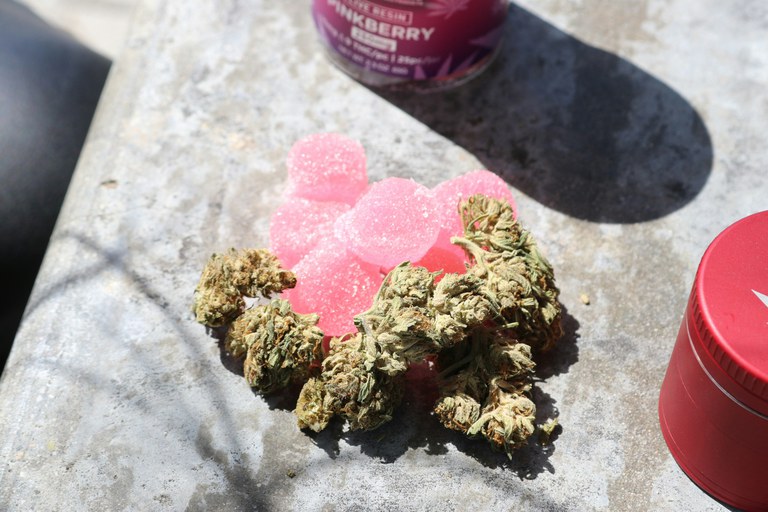
Cannabis, like life, is complicated. Calculating cannabis impairment (and how it impacts your ability to drive) is really hard. Our recommendation? Wait it out. Your level of impairment will depend on the dose and the method of consumption. Remember: As little as 10 mg of cannabis can be enough to impair you. Keep reading to learn more!
This guide is meant to be informative, not definitive. All the factors below play a role in “how high” you get and how long before the impairing effects of cannabis wear off. But everyone is different, every situation is different, and the physical and mental effects of cannabis on driving ability can last much longer than the feeling of being “high.”
When it comes to figuring out how a cannabis product may affect you – and how to plan for a safe drive once impairment wears off – it’s important to consider a few things:
- How are you consuming cannabis?
- How strong is the product you’re consuming?
- How much do you plan to consume?
- Your tolerance of the product.
Mode of consumption: The effects of eating vs. smoking vs. drinking cannabis
Smoking (flower, vaping or “dabbing”) — Tetrahydrocannabinol, or THC, is (one of) the impairing substances in cannabis. When you smoke flower or vape concentrates, THC enters your bloodstream almost immediately through your lungs. You get “high” faster and the impairing effects wear off faster as well.
Typical impairment duration: 2 to 4 hours.*
Eating cannabis edibles — THC is metabolized by your stomach and liver, which takes longer — both for “onset time” and for the effects to fully wear off. It can take as little as 30 minutes or up to two hours for the impairing effects to fully kick in.
Typical impairment duration: At least 8 hours.*
Cannabis beverages — Drinking THC or using tinctures is usually somewhere in the middle. Some THC can be absorbed through your mouth and stomach lining more quickly, but it is still slowly metabolized by your liver. You might feel the effects in as little as 15 minutes, but it could take an hour or more to feel the full effect.
Typical impairment duration: 3 to 6 hours.*
*Cannabis affects each person differently. These estimates are based on recommendations from the Colorado Department of Public Health and Environment (CDPHE). Make sure you read the label of the cannabis product you are consuming to understand its potency and whether or not it is designed for a faster onset (meaning you could feel the impairing effects sooner than you expect).
Potency: How strong is the cannabis product you’re consuming?
From "dad weed" (a playful term for less potent cannabis) to dabs, recreational to medical, and across flower strains, THC concentration in cannabis products varies wildly. This is true for regulated products found in licensed dispensaries, but even more so for products found outside the regulated market — including legal but unregulated “Delta 8” or intoxicating hemp THC products found in gas stations or liquor stores, and unregulated THC products found online.
Cannabis flower (loose leaf and pre-rolls) — Potency typically varies on the regulated market from as low as 7% up to 40% THC.
Concentrates (wax, shatter, live resin, vapes) — The sky’s the limit here. Smokeable or dabbable concentrate products typically have THC concentrations from 60% to 90% or higher.
Edibles (gummies, candy, beverages, tinctures, etc.) — Edibles are a little different. In Colorado’s regulated market, edibles are measured by dose, no more than 10 mg of THC per piece, with a max allowable 100 mg per package on the “recreational” side. Products under the umbrella of “medical marijuana” can be dosed much higher. In Colorado, consumers aged 21 or older purchasing cannabis from a recreational dispensary are only allowed to buy one ounce of cannabis products per day. Consumers who hold a medical marijuana license and are purchasing from a medical marijuana dispensary are allowed to buy up to two ounces of cannabis products per day.
Volume: How much will you consume?
Think about it this way: You can get as drunk from chugging beer as you can from sipping high-proof whiskey. Potency matters, but volume also plays a role. Here are a few things to consider:
- When smoking, how big is your “hit”? Are you smoking an entire joint or only taking a few hits from a pipe or bong? Also, how deep are you inhaling and how long are you holding in the hit? All these factors affect how much THC is absorbed by your body.
- Low-THC products can still make you very impaired if you consume a lot of them all at once or a lot over a long period of time.
- For THC drinks or edibles, are you continuing to consume until you feel as high as you want? If so, you might be in trouble because even after you stop eating or drinking THC, you could continue to get more impaired for several hours.
- It’s important to remember that you shouldn’t drive immediately after taking an edible. While the effects of an edible take a bit longer to kick in, you can’t predict when you’ll begin to feel impaired. It’s best not to experience these effects while you’re behind the wheel.
Tolerance
Tolerance is tricky with regard to cannabis-impaired driving. Some experienced cannabis consumers believe they can judge when they’re safe to drive — or even think they’re better drivers when they’re high. The science doesn’t back up that claim, as THC impairs the parts of your brain responsible for decision-making and judgment. Also, physiological impairment, like rapid heart rate, dry mouth or dizziness, and how high you feel mentally don’t always line up.
Cannabis impairment can affect your reaction time even after you feel like your high has worn off. And you may feel like you’re a good driver when you’re high, but it’s not always about you — other drivers on the road might do something stupid, and you’ll be in a situation where milliseconds are the difference between life and death. Remember: If you feel different, you drive different.
Other factors
As we mentioned, it’s complicated. Numerous other factors can play a role in how high you feel, the character of your “high” (whether you’re calm, energetic or nervous) and how it affects your ability to drive safely. Here are just a few things to consider:
- Polyconsumption — consuming alcohol and THC together amplifies your impairment. We’re seeing a rise in Colorado in crashes and fatalities involving drivers who are impaired by multiple substances. This applies to prescription medications as well.
- Cannabis strain — indica or sativa (sometimes described in marketing terms as“awake” or “chill”), affect people in ways that are highly personal. The “Colorado Kush” grown by one cannabis company may not affect you the same as that grown by another company. And don’t assume that if a product claims to have a “clean” or “functional” high, that it means it won’t impair your driving ability. It will.
- Your size and body composition — like with alcohol, body weight plays a role, but THC is a little different. While alcohol is water soluble, THC is fat soluble. Fat also plays a role in absorption, meaning that whatever you’re eating and drinking along with the edible THC you’re consuming can affect how high you get and how long the high will last. Contrary to popular belief, it is untrue that a person who weighs less will feel “more” impaired or get higher more quickly. This also means that someone who weighs more won’t necessarily need to consume more cannabis to get high. All consumers process cannabis differently, and its effects are subjective to your own unique biology!
- Sleep — how well-rested you are can play a role in how THC affects you.
- Other cannabinoids — we’ve discussed THC in this article, but there are many different cannabinoids derived from the cannabis and hemp plants. Some are intoxicating, others are not. Other popular cannabinoids include CBD, CBG and CBN. Also, be aware of illicit or unregulated synthetic cannabinoids, such as Delta-8, HHC, THCO and THCP. These illicit products are not tested for contaminants, like pesticides, heavy metals, mold or any residual compounds used in the conversion process, like strong acids. Read the labels, buy from the legal market, educate yourself on what you’re consuming and never drive high.
If you’re still curious and want to play around with the numbers, we recommend this tool created by the L.A. Times and USC Annenberg School that allows you to estimate THC consumption.
