
Program Resources
The Colorado Department of Transportation is committed to improving safety in work zones across the state. CDOT’s Speed Enforcement Program aims to manage speeds and reduce speed-related crashes along state-owned highways to improve safety for drivers, road workers, children and roadway users. We invite our partners to help educate your audiences about the program and share resources in this toolkit.
Thank you for your commitment to keeping Colorado roadway users safe!
Campaign Resources
Colorado Speed Enforcement Campaign Materials
Below is an example of some information that can be used to share about the Colorado Speed Enforcement Program on your respective website and/or newsletters:
Subject Line: Protect Lives – Watch Your Speed in Colorado Work Zones
Information:
The Colorado Department of Transportation (CDOT) is committed to improving safety in work zones across the state through the Colorado Speed Enforcement Program. This program uses automated speed cameras to monitor high-risk areas, reduce excessive speeds and protect drivers, roadway workers, children and other vulnerable road users.
Excessive speeding is the leading contributor to traffic fatalities in Colorado, surpassing impaired and distracted driving. Work zones are particularly dangerous due to narrow or shifting lanes, unexpected traffic patterns and the presence of roadside workers. Preliminary data shows that there were nine work zone fatalities in 2025, marking a 70% decrease since 2024 (30). Additionally, work zone crashes in Colorado caused 554 injuries in 2025, a nearly 8% decrease from 2024 (602).
Automated speed cameras work by photographing and timestamping vehicles at two points within a work zone and calculating the average speed between them. This point-to-point enforcement provides neutral, consistent monitoring without requiring in-person traffic stops, helping to prevent crashes and save lives. According to the Federal Highway Administration, programs like this can reduce highway fatalities by 20 to 37%.
CDOT’s program is active in work zones along CO 119 between Boulder and Longmont, I-25 North between Mead and Berthoud and I-25/US 50B in Pueblo, providing real-world examples of how automated speed cameras can improve safety. Vehicles exceeding the posted speed limit during enforcement are initially issued a warning during a grace period of at least 30 days. After this warning period, civil penalties ($75) are issued to the registered owner of the vehicle. Civil penalties do not result in points on a driver’s license.
CDOT encourages all drivers to slow down, stay alert and respect cone zones. Learn more about the program at codot.gov/programs/speedenforcement.
We encourage you to tailor your messaging for consistency with your organization’s voice, social media strategy and audiences. Feel free to share and engage with partner content to increase reach and awareness.
How It Works
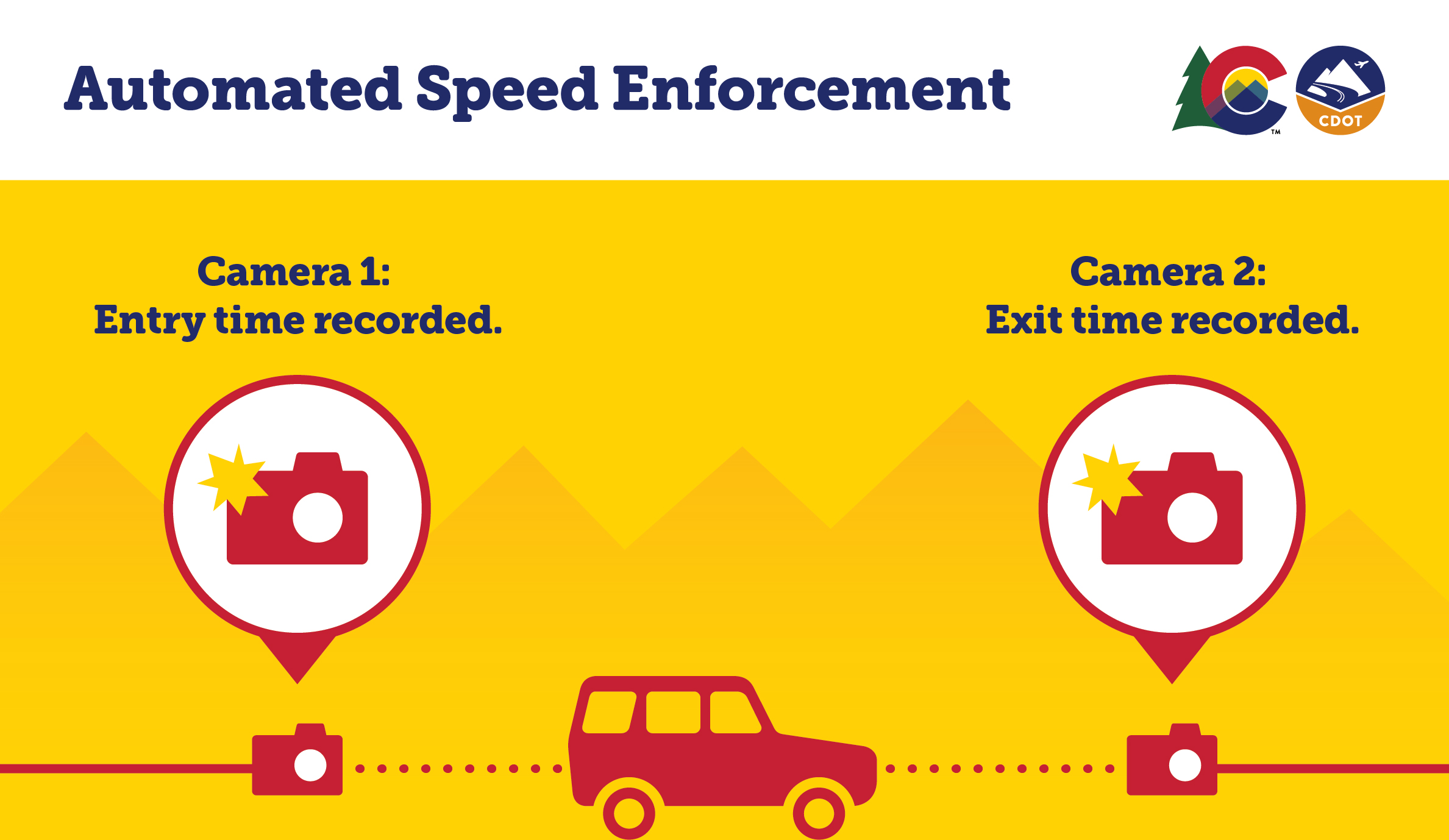
Graphic: PointToPointGraphic.jpg
Social media copy:
How the Colorado Speed Enforcement Program works:
Speed safety cameras will be placed in highway work zones at least a quarter to a half mile apart. When a vehicle passes each camera, an image, timestamp and license plate are captured. The system then calculates the average speed of a vehicle by dividing the distance by the travel time.
- Drivers exceeding the speed limit will be fined $75
- Drivers do not receive points on their license
- A warning period will precede enforcement for at least 30 days
Learn more at codot.gov/programs/speedenforcement.
#KnowBeforeYouGo #NoNeedforSpeed
Why Is This Program Being Implemented?
Graphic: Speed | Program Implementation.jpg
Social media copy:
Why is the program being implemented?
- This program aims to reduce the number of speed-related crashes and fatalities in work zones and high-risk areas
- In 2024, Colorado had 31 work zone fatalities, marking a 210% increase since 2022
- Unpredictable conditions in work zones with narrow, shifting lanes can pose a significant threat to vulnerable roadside workers and travelers
For more information, visit codot.gov/programs/
#NoNeedforSpeed #KnowBeforeYouGo #SlowfortheConeZone
How Does the Camera Technology Work?
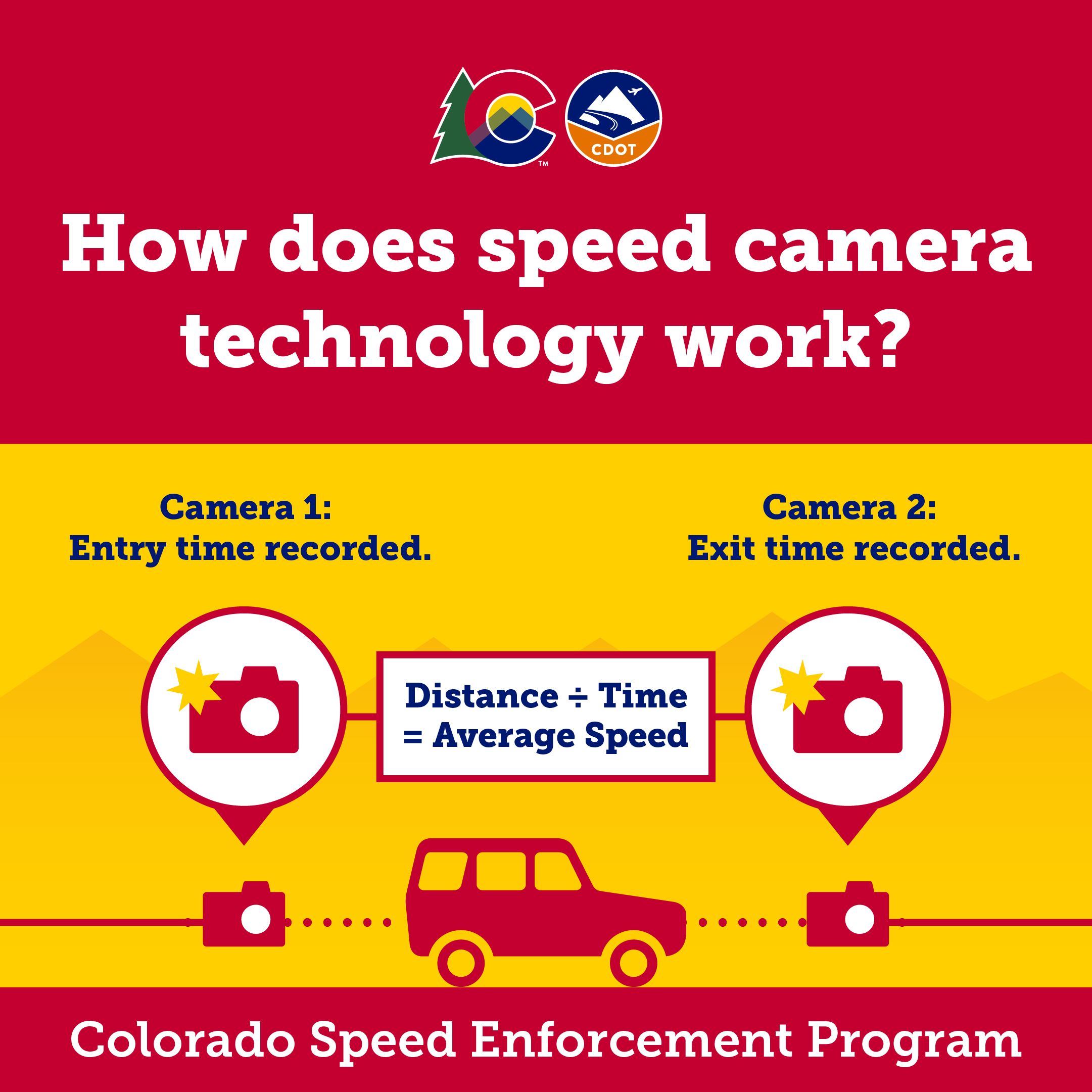
Graphic: Speed | How does speed camera technology work.jpg
Social media copy:
Ever wonder how the Colorado Speed Enforcement Program cameras work? It’s thanks to clever technology called Point-to-Point (P2P).
- P2P units use multiple cameras to measure the average speed of a vehicle over a set distance
- The technology calculates average speed by dividing the distance by the travel time
- Drivers exceeding the speed limit in an active work zone will be issued a warning or fined $75
According to the Federal Highway Administration, P2P units can reduce crashes resulting in injury or fatality by 37%.
For more information, visit codot.gov/programs/
#SlowfortheConeZone
#NoNeedforSpeed #KnowBeforeYouGo
The Legal Basis
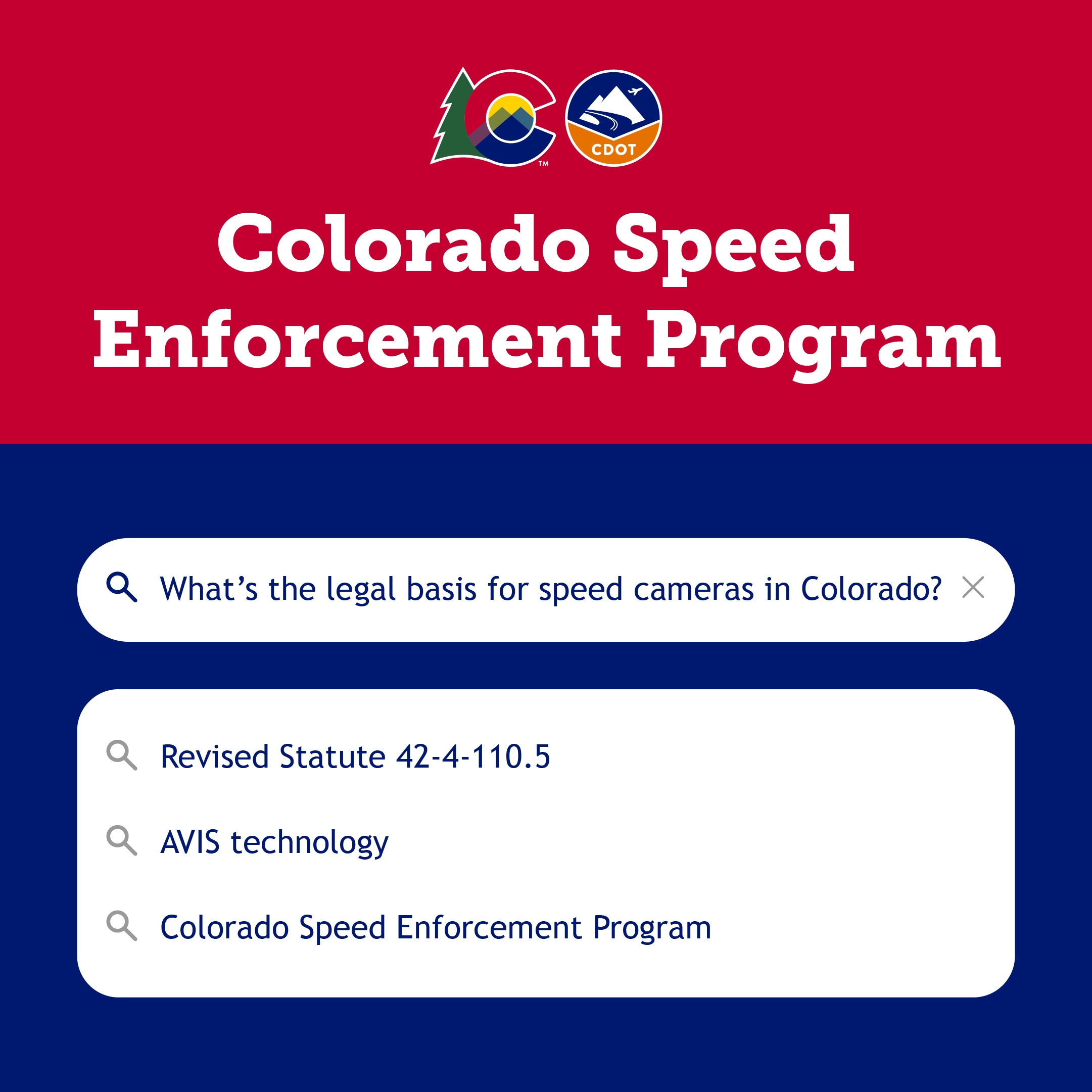
Graphic: Speed | Legal Basis.jpg
Social media copy:
Question: Is the use of speed camera technology in Colorado legal?
Answer: It absolutely is! Colorado law, specifically Revised Statute 42-4-110.5, authorizes the use of
automated vehicle identification systems (AVIS), or speed cameras, to enforce traffic laws in high-risk driving corridors, like active work zones.
Question: What about my right to confront my accuser?
Answer: The right to confront your accuser is a constitutional right but only applies to criminal prosecutions.
In Colorado, a speed camera ticket is a civil violation, not a criminal offense. These are treated like
other civil traffic infractions and aim to promote safer driving behaviors from motorists in high-risk
areas.
To learn more about the program, visit codot.gov/programs/speedenforcement.
#NoNeedforSpeed #SlowfortheConeZone
#KnowBeforeYouGo
Where Does the Money Go?
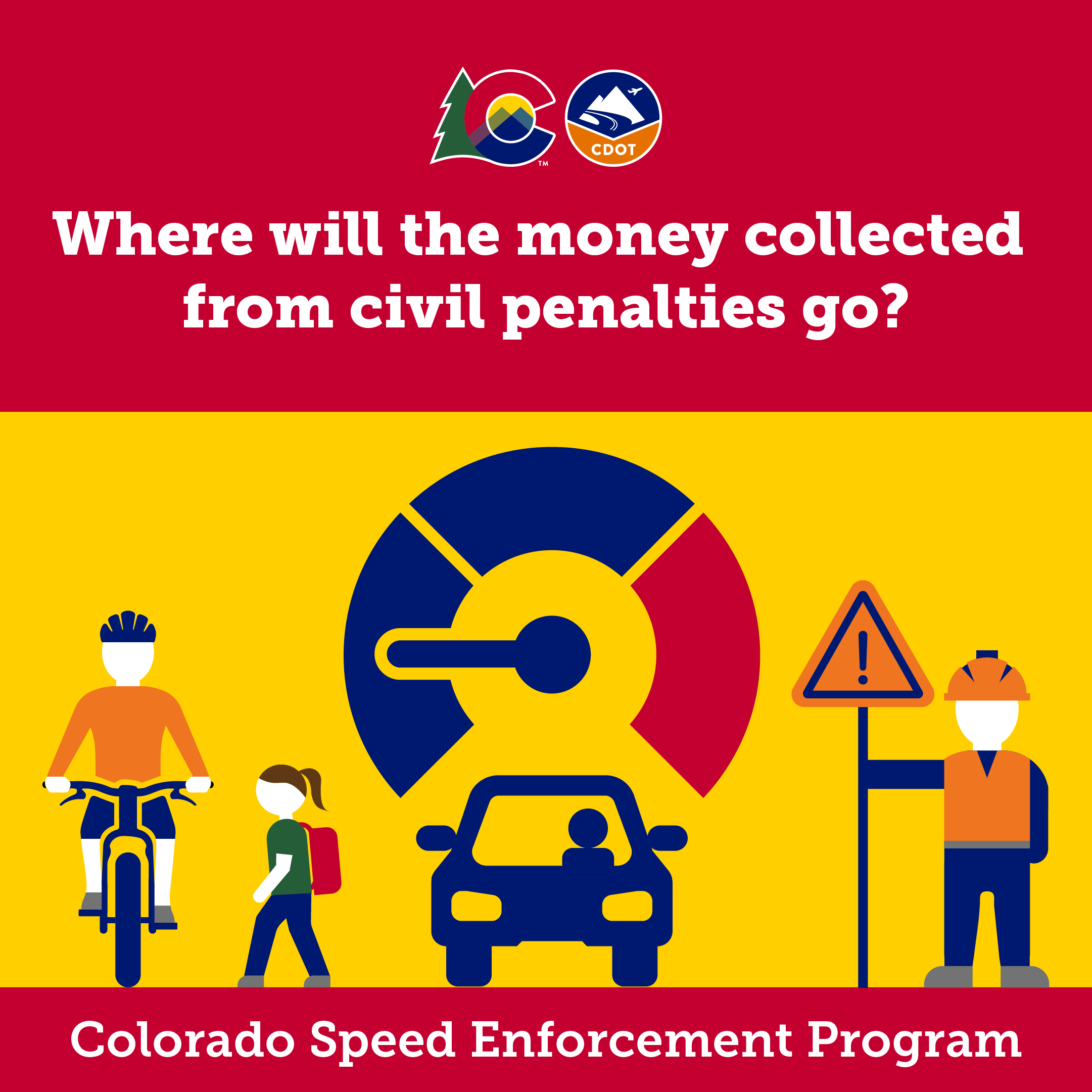
Graphic: Speed | Funding Distribution.jpg
Social media copy:
Where will the money collected from the Colorado Speed Enforcement Program’s civil penalties go?
CDOT has a simple two-part answer:
It’s invested in safer roads for everyone: Any excess revenue is directed to the Vulnerable Road User Protection Fund, a fund dedicated to building safer infrastructure, such as sidewalks for
pedestrians and protected bike lanes for bicyclists.
It keeps the lights on: The revenue collected from civil penalties is primarily used to fund this program, making it a self-sustaining safety initiative that can be implemented in other high-risk traffic
corridors, like active work zones.
For more information, visit codot.gov/programs/speedenforcement.
#SlowfortheConeZone
#NoNeedforSpeed #KnowBeforeYouGo
How Is the Data Stored?
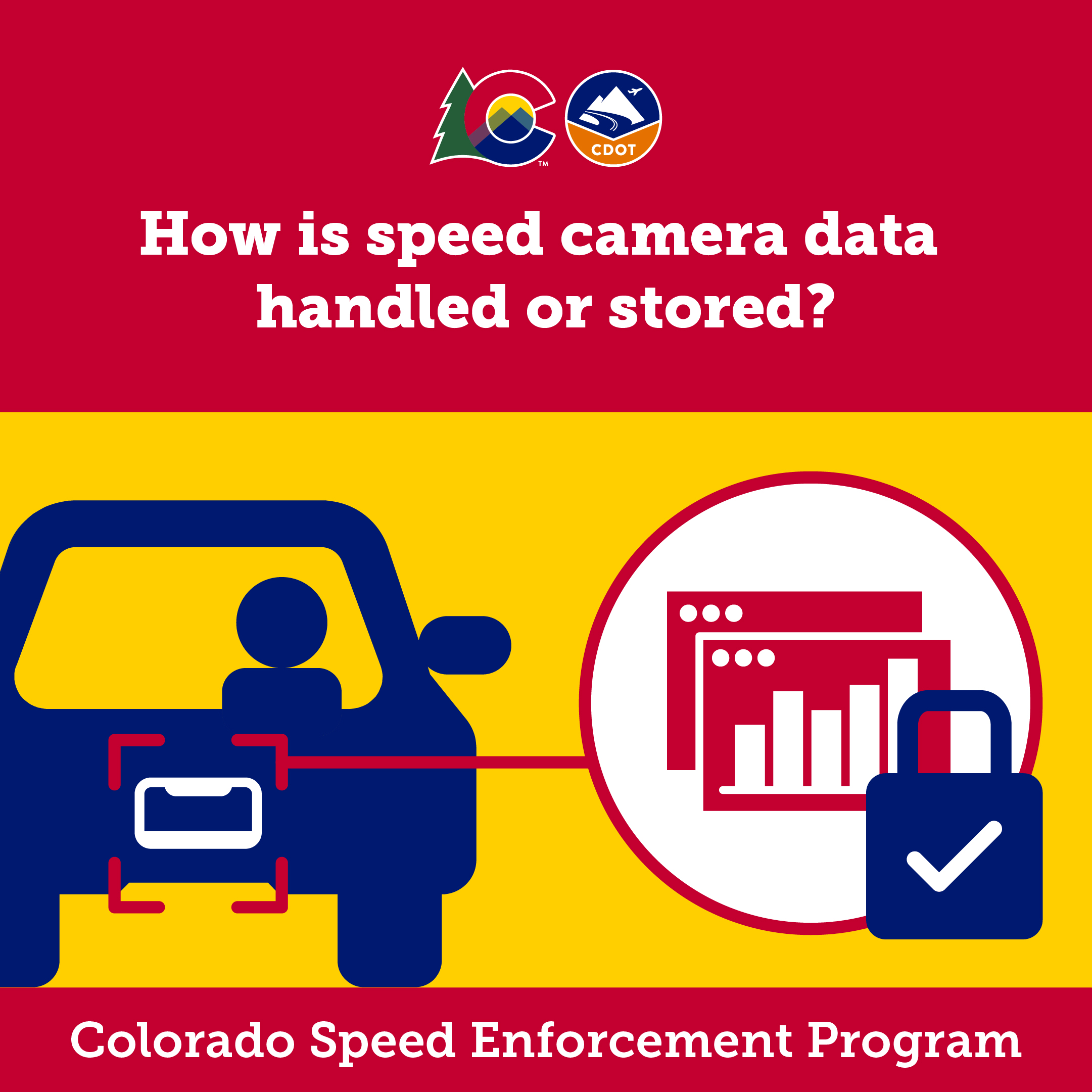
Graphic: Speed | Data Collection.jpg
Social media copy:
What do we do with the data collected from the Colorado Speed Enforcement Program?
The short answer: Not much.
Under automated enforcement legislation, the use of collected data is limited to a few select purposes
designed to protect your privacy. We take your data very seriously and are committed to full
transparency throughout the enforcement process.
- We only collect data for a violation. Cameras installed in active work zones are programmed to only keep footage when a traffic violation is detected.
- All photos and videos collected are confidential and protected by law — they are not public records.
- Data is only used for necessary operations of the program, such as processing violations or other law enforcement purposes allowed by law.
- We destroy all footage within three years of the violation being resolved.
For more information, visit codot.gov/programs/speedenforcement.
#NoNeedforSpeed #SlowfortheConeZone
