
Colorado Speed Enforcement Program
Program Overview
The Colorado Speed Enforcement program aims to manage speeds and reduce speed-related crashes along state-owned highways to improve safety for drivers, road workers, children and roadway users. Speed safety cameras may be placed in work zones along high-risk corridors where speeding is a major issue to help prevent crashes and save lives.
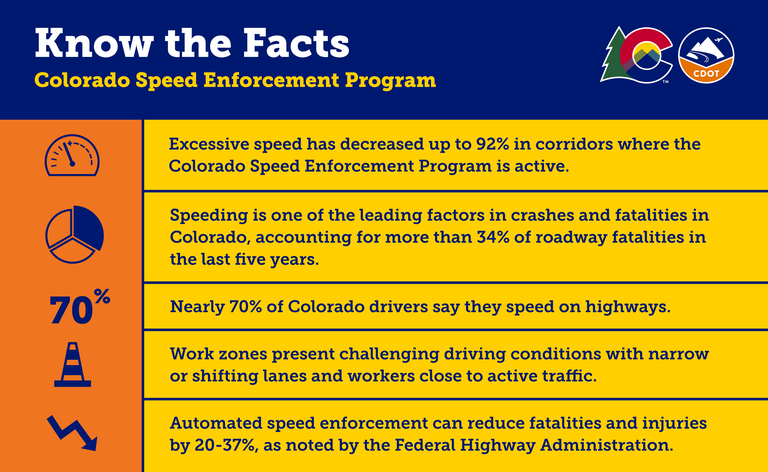
Automated speed enforcement technology is an effective way to limit dangerous speeds. According to the Federal Highway Administration, these systems can reduce the risk of a crash on a major road by 54%, crashes resulting in injury by 47% and fatal crashes by 37%. Since the launch of the Colorado Speed Enforcement Program, the impact has been promising, with sharp decreases in excessive speeding on active corridors.
Work zones present challenging driving conditions with narrow or shifting lanes and often active equipment and workers on the roadway, reducing room for driver error. Traditional law enforcement is difficult in these areas, making speed safety cameras a vital tool. This program is focused on protecting lives, not punishing drivers. Enforcing compliance with posted speed limits in work zones means safer roads statewide.
In 2023, the Colorado General Assembly passed Revised Statute 42-4-110.5, expanding the use of automated vehicle identification systems (AVIS). This allows CDOT and local agencies to enforce speed compliance using cameras and sensors in high-risk driving corridors. The initiative will increase officer and roadway safety, reduce the need for roadside stops, ease traffic congestion and serve as a strong deterrent against excessive speeding.
In accordance with C.R.S § 24-72-201 to 206, CDOT provides all public records for inspection by any person at reasonable times, except as provided in part two or as otherwise specifically provided by law. To learn more or to submit a CORA request, visit the CORA Information and Procedure page.
