
What is microdosing and am I safe to drive?
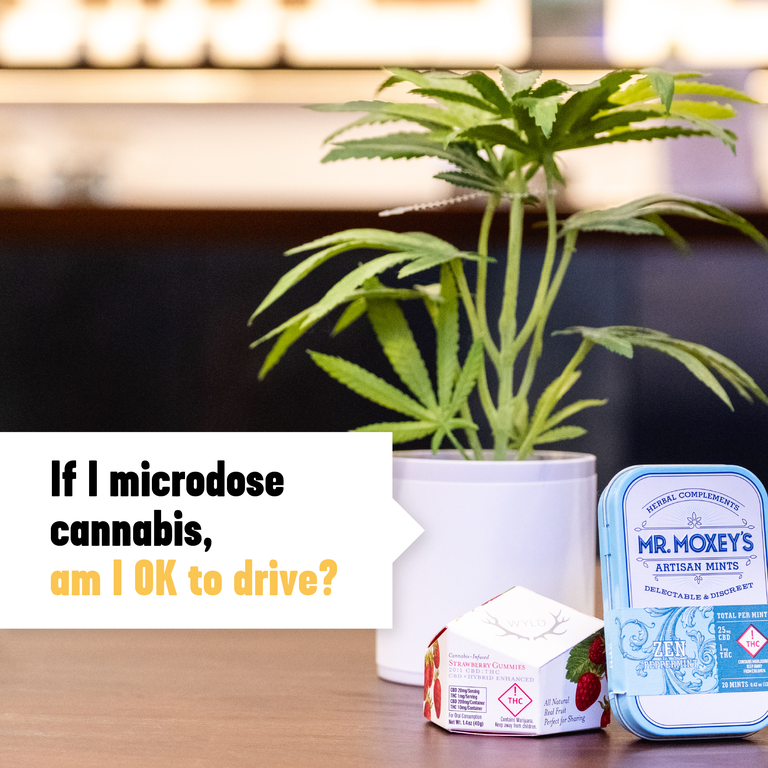
Microdosing is a growing trend among cannabis consumers — but using small amounts of cannabis can still lead to impaired driving and a DUI.
Key Takeaways
- Microdosing, also known as consuming small amounts of an intoxicating substance or taking a “sub-perceptual” dose, is a growing trend.
- Consuming any amount of THC and getting behind the wheel puts you at risk of a DUI that can cost more than $13,530 – regardless of the microdose amount.
- Trust the science: Active Delta-9 THC is the impairing compound in cannabis and isn’t metabolized at a predictable rate like alcohol is, making impairment calculations based on body weight and consumption time difficult.
Whether you’re experimenting with cannabis as an alcohol alternative or consuming small doses to maintain a “functional high” and in pursuit of other wellness benefits, you’re not alone. Microdosing, or consuming small amounts of an intoxicating substance, is a growing trend nationwide. Cannabis consumers may be microdosing to inspire creativity, for daytime productivity, to manage anxiety or for any other number of purported benefits.
The typical cannabis gummy found in a licensed dispensary contains 10mg of THC, the impairing substance most commonly found in marijuana products. A microdose might be 1.5 to 5 mg THC, for example. And many cannabis beverages found outside of licensed cannabis retailers contain 1.5 to 3mg of THC — often along with other non-impairing cannabinoids like CBD.
If you’re microdosing cannabis, are you safe to drive?
If you’re microdosing or taking what’s sometimes referred to as a “sub-perceptual” dose, where does this leave you when it comes to deciding whether or not to drive? It may seem like a tough decision, but the answer is simple: If you feel different, you drive different. Sub-perceptual does not mean sub-impairment. Consuming any amount of THC and getting behind the wheel puts you at risk of a DUI. And Colorado law enforcement are highly trained to recognize impairment, no matter the impairing substance.
It’s also important to note that even if you are a medical marijuana cardholder, you aren't immune and DUI law still applies. If you drive impaired, you can get a DUI.
What does the science say?
The science and research behind marijuana and physical impairment is well established at this point. Cannabis measurably and significantly impairs a driver’s reaction time and ability to do complicated tasks like driving. Tolerance, potency and time to sober up all also play a role in your level of impairment. Learn more in our guide to calculating cannabis impairment here.
Active Delta-9 THC, the impairing compound in cannabis, isn’t metabolized at a predictable or reliable rate like alcohol is, meaning calculating impairment based on your body weight and time since you last consumed is not a reliable method, as it can be with alcohol. To see more studies on cannabis and driving, visit our research page on the DriveHighDUI.com website.
It can be hard to tell how much you can “safely” consume or if you’re too impaired to drive — or how long you should wait to be sober enough to drive, even if you’re consuming small amounts. So why take the risk? The safest solution is not to drive if you plan to consume any amount of cannabis.
Combining cannabis and alcohol
Sadly, polydrug-impaired driving in Colorado is also on the rise. Even mixing half an edible with one IPA could put a driver at risk of a DUI or worse. Clinical research from the American Association for Clinical Chemistry shows that “...the simultaneous use of alcohol and cannabis produces significantly higher blood concentrations of cannabis's main psychoactive constituent, THC, as well as THC's primary active metabolite than cannabis use alone.”
If you’re pulled over and the law enforcement officer deems you impaired, that is legal grounds for arrest — and a DUI. Risking the consequences and driving impaired under one or multiple substances is not worth it.
It may seem like a tough call, but it shouldn’t be
The conversation around cannabis and driving continues to be challenging, with many strong opinions on both sides of the issue. But with different tolerances and metabolization rates across every individual, it's almost impossible to pin down a number regarding how much is too much.
The bottom line is that driving high should never be an option. Hundreds of people are dying on Colorado roads due to impaired driving every year. Driving under the influence of any impairing substance simply isn’t worth the risk or consequences.
Always play it safe
Consuming marijuana, alcohol or both is a personal choice and legal in Colorado. But when you drive under the influence, you put yourself and others on the road in danger, and risk getting a DUI that can cost more than $13,500. Leave your car at home, find a sober ride, or stay in and enjoy yourself if you plan to consume cannabis.
If you’d like to learn more about cannabis and driving in Colorado, take this quick, free, 5-minute interactive online course.
Poly-Impaired Driving (using two or more substances)
Driving under the influence of alcohol, cannabis, natural medicine (psilocybin) or other drugs — especially when combined — is dangerous and illegal. Using two or more intoxicating substances together (also known as “poly-consuming”, “polysubstance use” or “polydrug consumption”) enhances the effects of each substance and increases the risk of a crash. In fact, about one-third of drivers in fatal crashes involving impairment in Colorado test positive for multiple impairing substances, including alcohol. Motorists should know that Colorado Drug Recognition Experts are trained to recognize impairment in drivers under the influence of drugs and/or alcohol, and that impaired driving of any kind can lead to a DUI arrest.
